Anybody who knows me knows exactly how I feel about Christopher Columbus.
You cannot discover something that has already been discovered, and you cannot claim something that already belongs to someone else.
So, when I learned that October 9 is Leif Erikson Day, I decided we needed to talk about a little history.
Because Columbus wasn’t even the first European to reach the Americas.
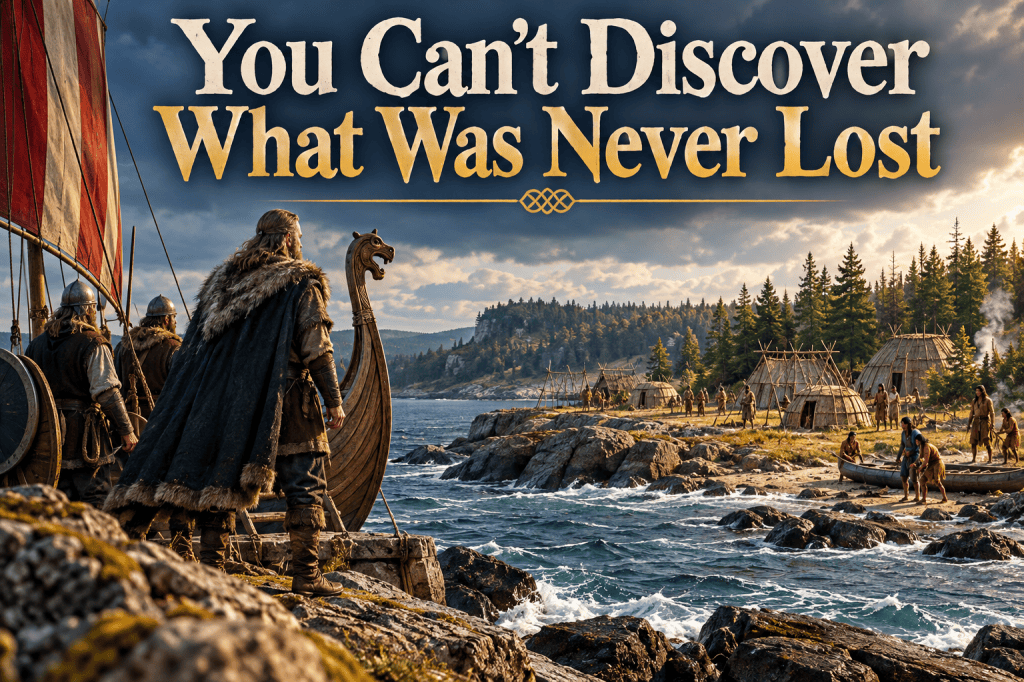
Nearly 500 years before Columbus arrived in the Caribbean in 1492, Norse explorers were sailing across the North Atlantic.
Around the year 1000 AD, Leif Erikson is believed to have reached North America. The Norse sagas describe a land called Vinland, often translated as Wine Land, a name traditionally associated with wild grapes or vines.
But here’s where the story gets interesting.
For centuries, those voyages were preserved in Norse stories. Then, in 1960, archaeologists identified the remains of a Norse settlement at L’Anse aux Meadows, in Newfoundland, Canada.
They uncovered the remains of buildings, evidence of ironworking, and artifacts confirming that Norse explorers had actually been there.
Today, the site is recognized as a UNESCO World Heritage Site.
Now, does that prove Leif Erikson personally stood at that exact location? Not necessarily. And historians still debate exactly how much territory the Norse called Vinland.
But the archaeological evidence confirms something important: Europeans reached North America long before Columbus.
And here’s the part I don’t want anyone overlooking.
Indigenous peoples had already inhabited the Americas for thousands of years before the Norse arrived. In fact, archaeologists have found evidence of Indigenous activity at L’Anse aux Meadows dating back thousands of years before the Viking settlement.
Think about that.
People had lived, traveled, raised families, and built communities on these lands long before Europeans began writing about their voyages.
I’m not saying Leif Erikson’s journey wasn’t remarkable. Sailing across the North Atlantic around a thousand years ago was an extraordinary accomplishment.
But exploring a place and discovering an uninhabited land are two very different things.
The Americas weren’t waiting to be discovered. People were already here.
And perhaps that’s the history lesson worth remembering today.
—Guyton





Leave a Reply